Report on Basic Astronomy Workshop

Report on Basic Astronomy Workshop – 2026
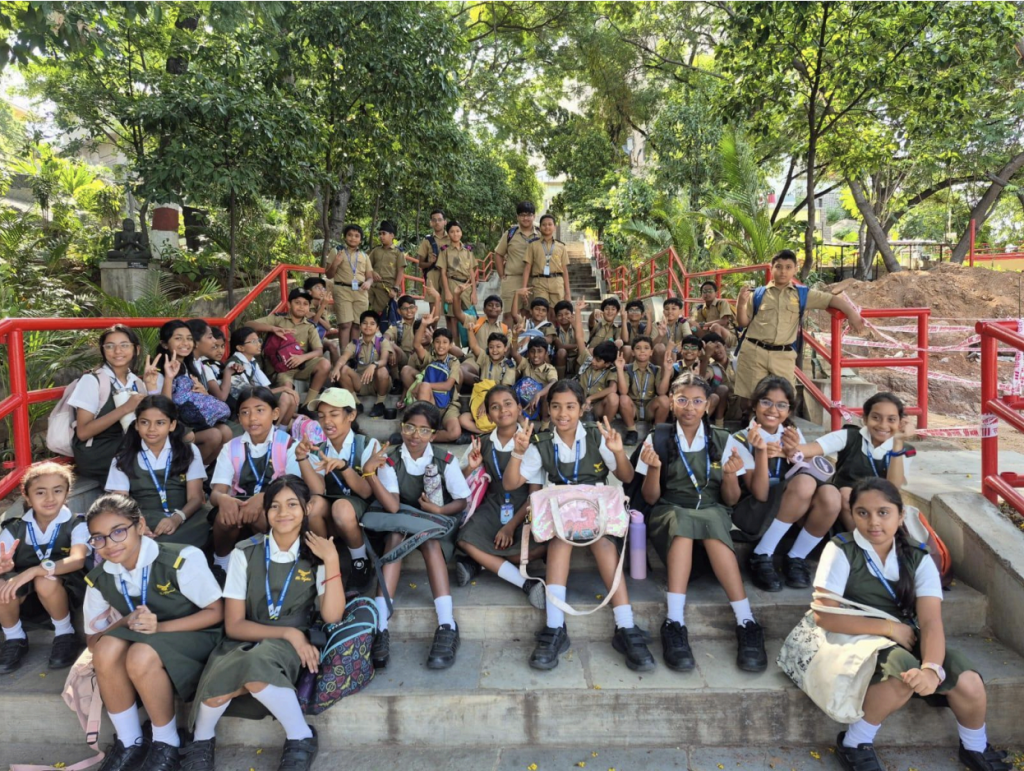
The Physics Department of Hyderabad Public School, Begumpet, organised a Basic Astronomy Workshop for students of Classes VI, VII and VIII at Birla Planetarium, Hyderabad, on 22nd August 2026, in collaboration with SPACETOPIA – an ISRO Registered Space Tutor.
The workshop was organised with the aim of developing curiosity about astronomy among students and providing them with an opportunity to experience science through interactive presentations, discussions and hands-on activities. A total of 103 students participated in the workshop. They were accompanied by six teachers.
- Cosmic Calendar – A Journey Through Time
The session began with an engaging presentation on the history and evolution of the Universe. Students were introduced to the immense age of the Universe that is estimated to be around 13.8 billion years, and were given the opportunity to explore major events from the Big Bang to the formation of stars, galaxies, the Solar System and life on Earth.
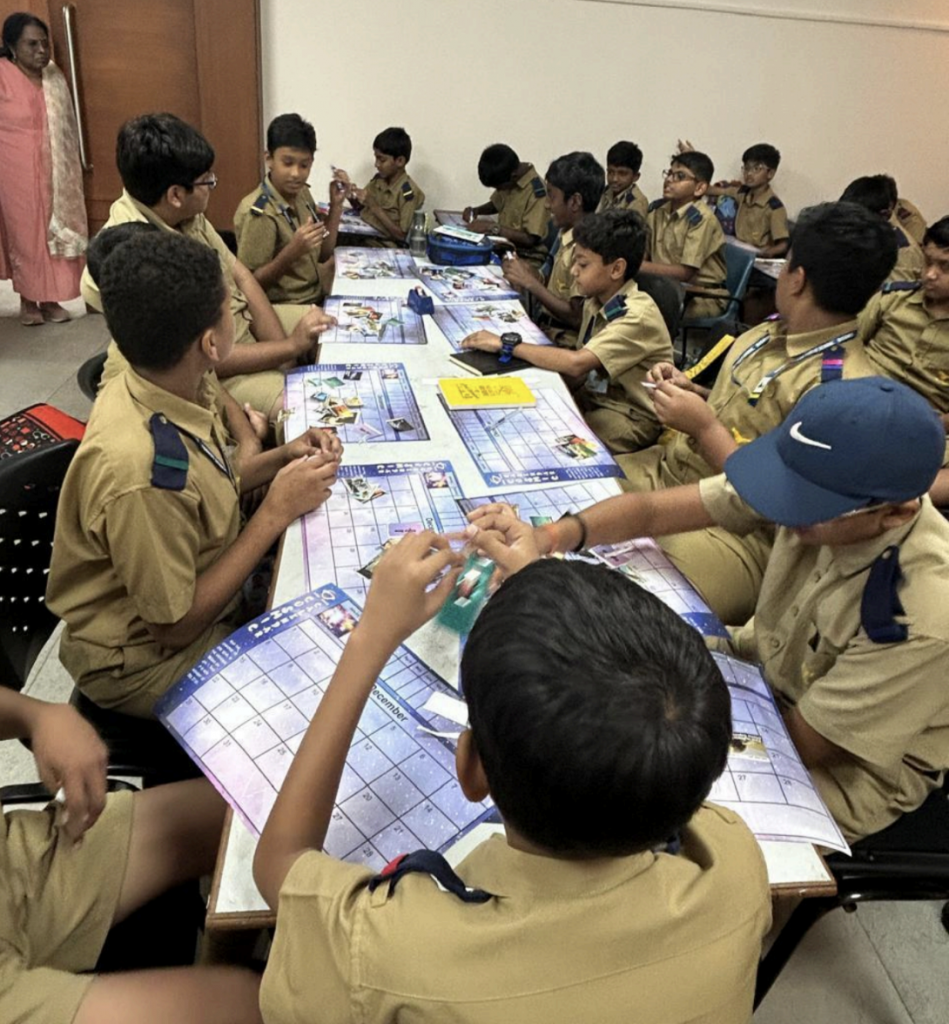
The presentation was followed by an interactive Cosmic Calendar activity. Students worked with a scaled representation of cosmic history in which the entire history of the Universe was compressed into a single calendar year. They identified and placed important milestones on this timeline and discussed how recently humans appeared when compared with the age of the Universe.
The activity helped students visualise the enormous scale of cosmic time in a simple and meaningful way.
- James Webb Space Telescope – The Space Marvel
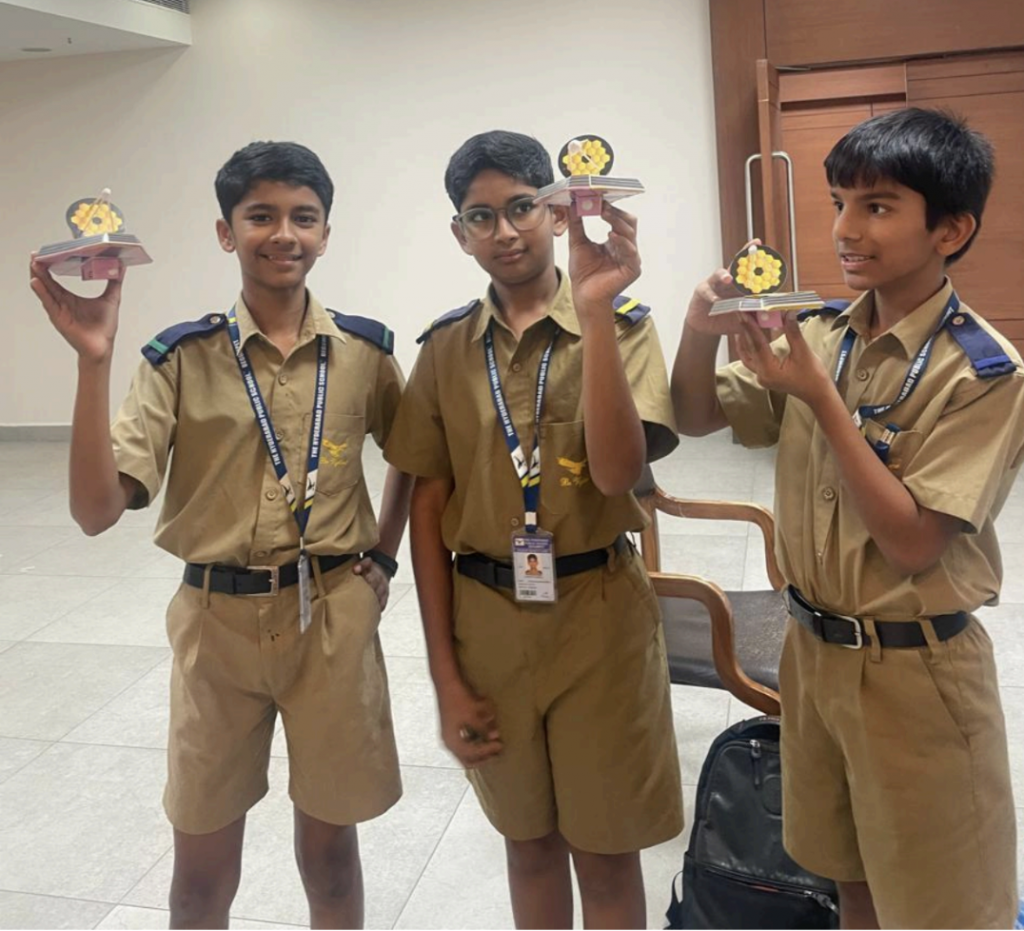
The second session began with a presentation introducing students to the James Webb Space Telescope (JWST). Students learnt about the telescope’s design, its capabilities and the ways in which it complements the discoveries made by the Hubble Space Telescope.
The presentation also helped students understand an important idea in astronomy — looking farther into space means looking further back in time. Students explored how JWST allows scientists to study extremely distant objects and investigate the early Universe, including some of the earliest stars and galaxies.
This was followed by an interactive activity through which students further explored the capabilities and scientific significance of the James Webb Space Telescope. The session generated considerable curiosity, with students active participation by asking questions about how telescopes can observe objects that are billions of lightyears away.
- The Giant Moon Map – Exploring the Lunar Surface
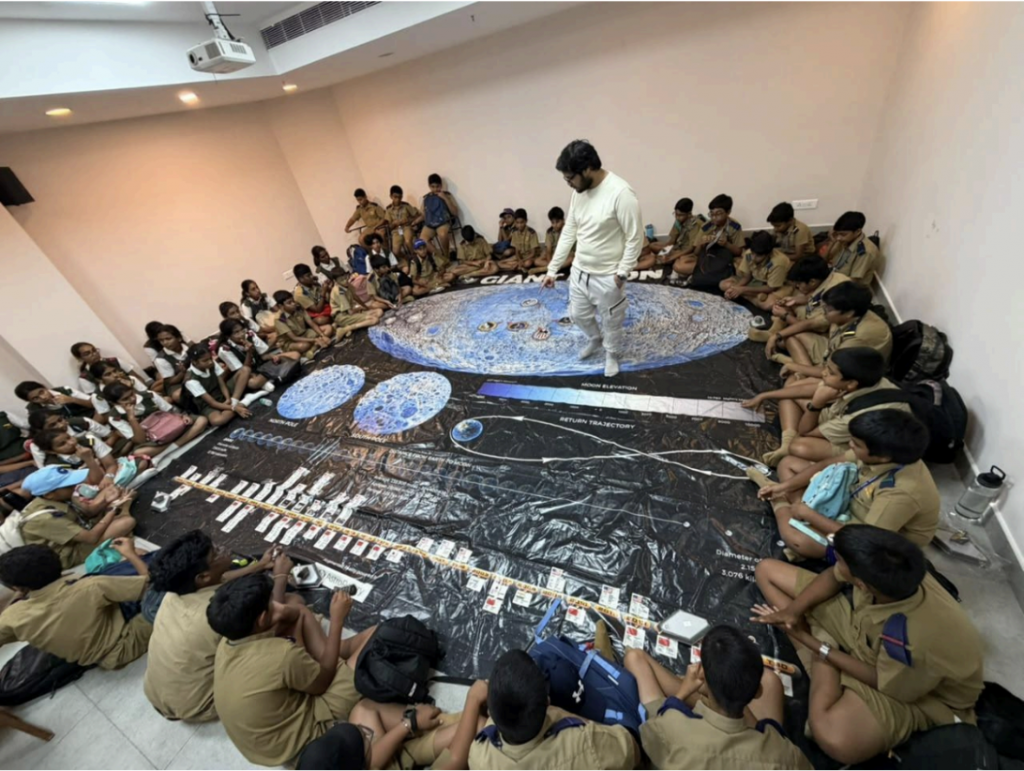
The third session was an interactive Giant Moon Map activity. Students were first introduced to the topography of the Moon and were taught to recognise different types of lunar surface features, including craters, maria, highlands and other prominent regions.
The activity then moved towards a practical space-exploration challenge: How do we find a suitable landing site on the Moon?
Students discussed different factors that need to be considered while selecting a lunar landing site. They learnt that choosing a landing location is not simply a matter of finding a flat area; scientists and mission planners need to study the terrain, surface features, safety, accessibility and scientific value of a location.
Through the Giant Moon Map, students examined the lunar surface and discussed how information about the Moon’s topography can be used to identify suitable locations for a spacecraft or future lunar mission to land.
This activity gave students an opportunity to think like lunar mission planners, applying scientific reasoning to a real-world space exploration problem.
Learning Beyond the Classroom
The workshop provided students with an opportunity to move beyond textbook learning and experience astronomy through visualisation, discussion, exploration and problem-solving. The combination of presentations followed by hands-on activities helped students connect scientific concepts with real space missions and discoveries.
The enthusiastic participation of the students, their questions and their excitement throughout the sessions made the workshop a memorable learning experience. It also encouraged them to look at astronomy not merely as a collection of facts, but as a field driven by curiosity, observation, evidence and scientific thinking.
The successful workshop was a meaningful step towards nurturing the spirit of exploration among our HPS Eaglets encouraging them to continue looking up, asking questions and exploring the Universe.